Advanced Engineering Informatics • Volume 74 • 2026 • Article 104685
Transferable Snippet Augmentation Network (TSAN)
Engine-specific degradation prediction via trend-grouped fine-tuning, using transferable snippets from similar degradation stages to improve forecasting accuracy under limited data.
Authors
Haoze Wu; Shisheng Zhong; Minghang Zhao; Yongjian Zhang; Xuyun Fu; Song Fu
Affiliations
- a. School of Mechatronics Engineering, Harbin Institute of Technology, Harbin 150001, China
- b. Department of Mechanical Engineering, Harbin Institute of Technology, Weihai 264209, China
- c. Weihai Key Laboratory of Intelligent Operation and Maintenance, Harbin Institute of Technology, Weihai 264209, China
Core idea
TSAN shifts personalization from one-model-per-engine to group-wise fine-tuning over shared degradation tendencies. Instead of adapting to each engine independently, it reuses transferable degradation snippets from engines in similar life stages, reducing maintenance overhead while improving prediction accuracy and stability.
TSAN at a glance
A two-stage framework: train one base predictor on all engines, then cluster degradation-trend representations and fine-tune specialized predictors for each trend group.
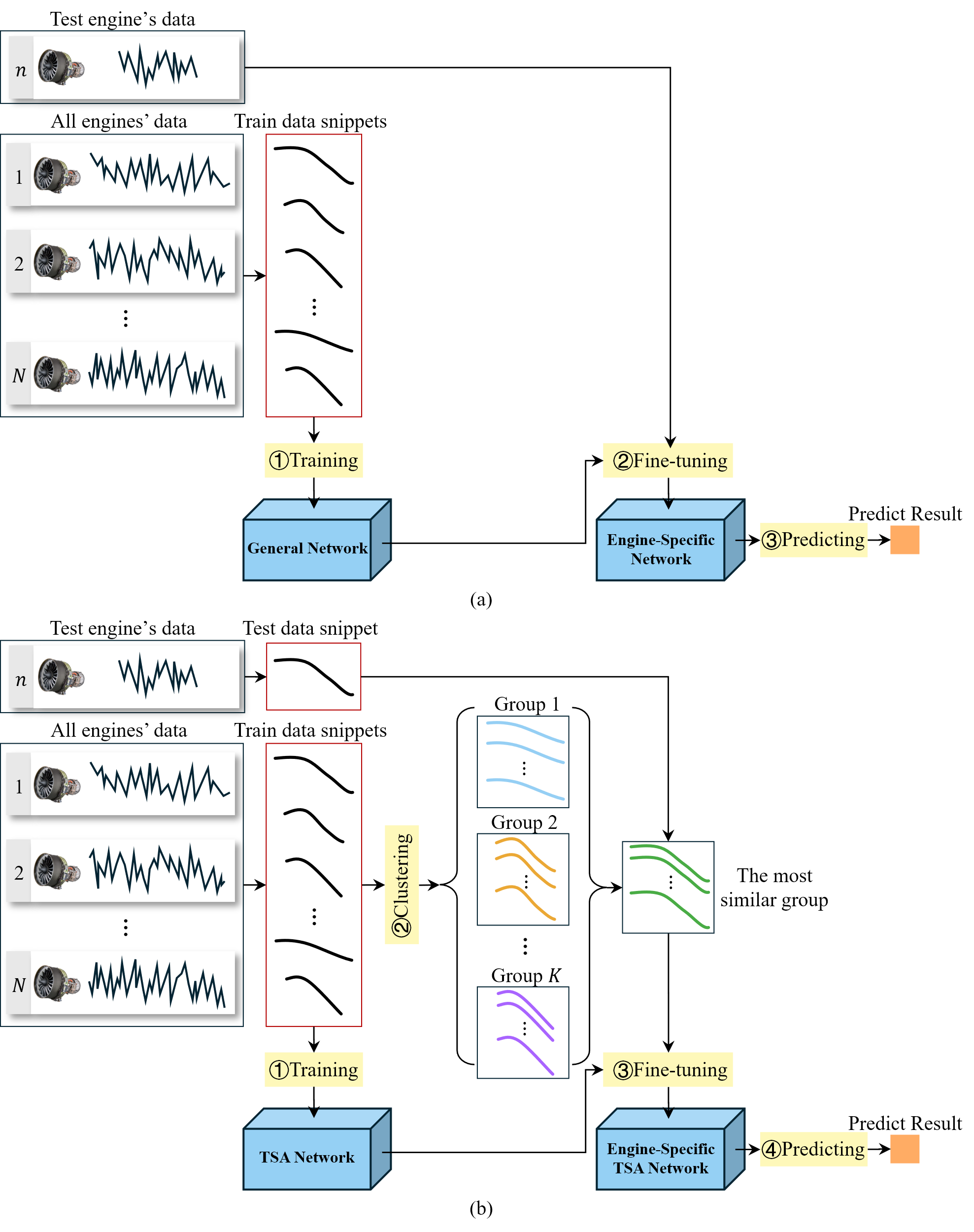
Fig. 2: TSAN replaces per-engine fine-tuning with trend-grouped fine-tuning based on transferable snippets.
Problem
Per-engine fine-tuning is expensive to maintain and weak when a new engine has only a small amount of historical data.
Key idea
Share short degradation snippets across engines when they exhibit similar deterioration tendencies.
Representation
TSAN learns latent degradation-trend embeddings and assigns samples to trend groups with Gaussian mixture modeling.
Benefit
Fewer specialized models are needed, while prediction accuracy and robustness both improve.
Overview
Abstract
Accurate prediction of key gas path performance parameters is important for aero-engine maintenance planning. A unified model trained on all engines often misses engine-specific behavior, while fine-tuning one model per engine is costly and unreliable for data-scarce engines. TSAN addresses this by moving adaptation from the engine level to the degradation-trend level. It first trains a base model on all engines, then embeds and clusters degradation snippets into trend groups, and finally fine-tunes specialized predictors for each group. Experiments show 36.0%, 35.7%, and 34.1% improvements over baselines in MAE, MRE, and RMSE, along with better stability and fewer maintained models.
Paper details
- Title
- Engine-specific degradation prediction of aviation engines via transferable snippet augmentation: A trend-grouped fine-tuning perspective
- Journal
- Advanced Engineering Informatics
- Volume
- 74 (2026)
- Article
- 104685
- Online
- 15 April 2026
Keywords & concepts
Method
TSAN combines representation learning, trend grouping, and grouped fine-tuning. The base model learns degradation-aware hidden states, then transferable snippets with similar latent trends are grouped to build specialized predictors.
1. Train a shared base model
All engines contribute to one base predictor so the model can learn common operational and degradation dynamics.
2. Learn trend representations
A representation module encodes degradation snippets and aligns them with the predictive hidden state for physically meaningful trend embeddings.
3. Cluster into trend groups
Gaussian mixture modeling groups snippets with similar degradation tendencies, enabling soft assignment and inference on new samples.
4. Fine-tune by trend, not by engine
At inference time, the most similar trend group is selected and its specialized model is used for prediction.
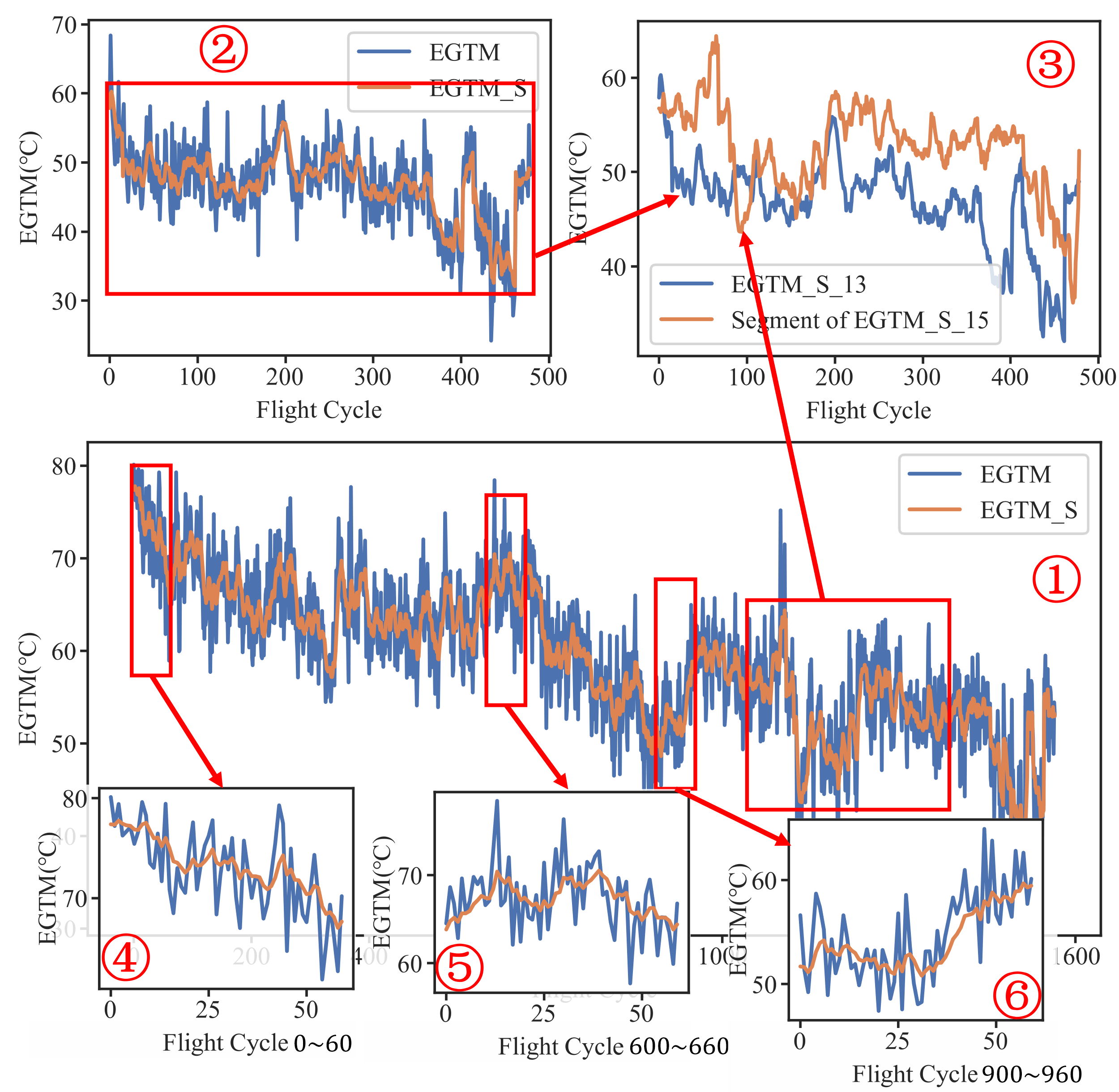
Fig. 5: Different engines and different life stages can share locally similar degradation snippets, supporting transfer beyond engine identity.
Perspective shift
From engine-level adaptation to degradation-trend-level adaptation.
Data reuse
Useful segments from other engines become transferable support for a target engine.
Deployment
Model maintenance becomes lighter because one predictor can serve a trend group rather than a single engine.
Results
TSAN consistently outperforms the baseline engine-level fine-tuning strategy and other sequence models, especially on engines with limited historical data.
Model count
53% fewer
Average number of fine-tuned models drops from the engine perspective to the trend-group perspective.
Main gains
36.0% / 35.7% / 34.1%
Relative improvements in MAE, MRE, and RMSE over the best fine-tuning baseline.
Stability
+18.0% / +11.1% / +15.2%
Lower standard deviation across engines on MAE, MRE, and RMSE indicates more stable prediction.
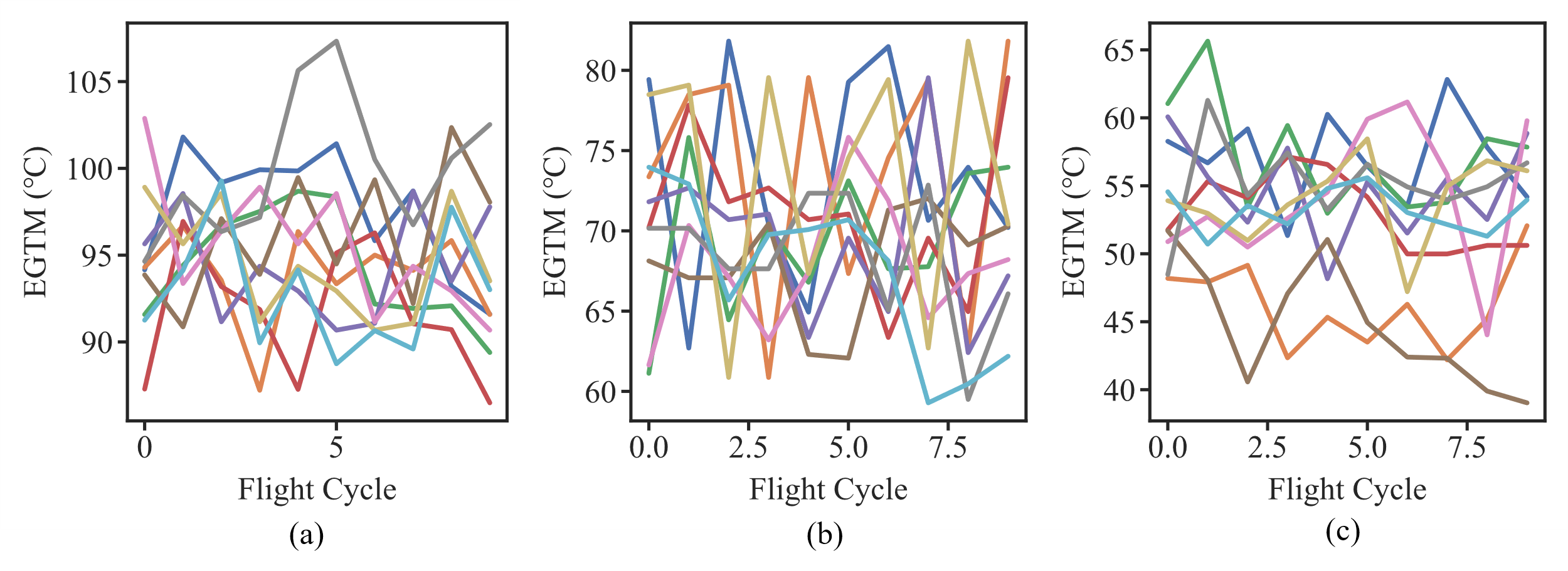
Fig. 8: Representative early-life, mid-life, and late-life degradation trend groups identified by TSAN.
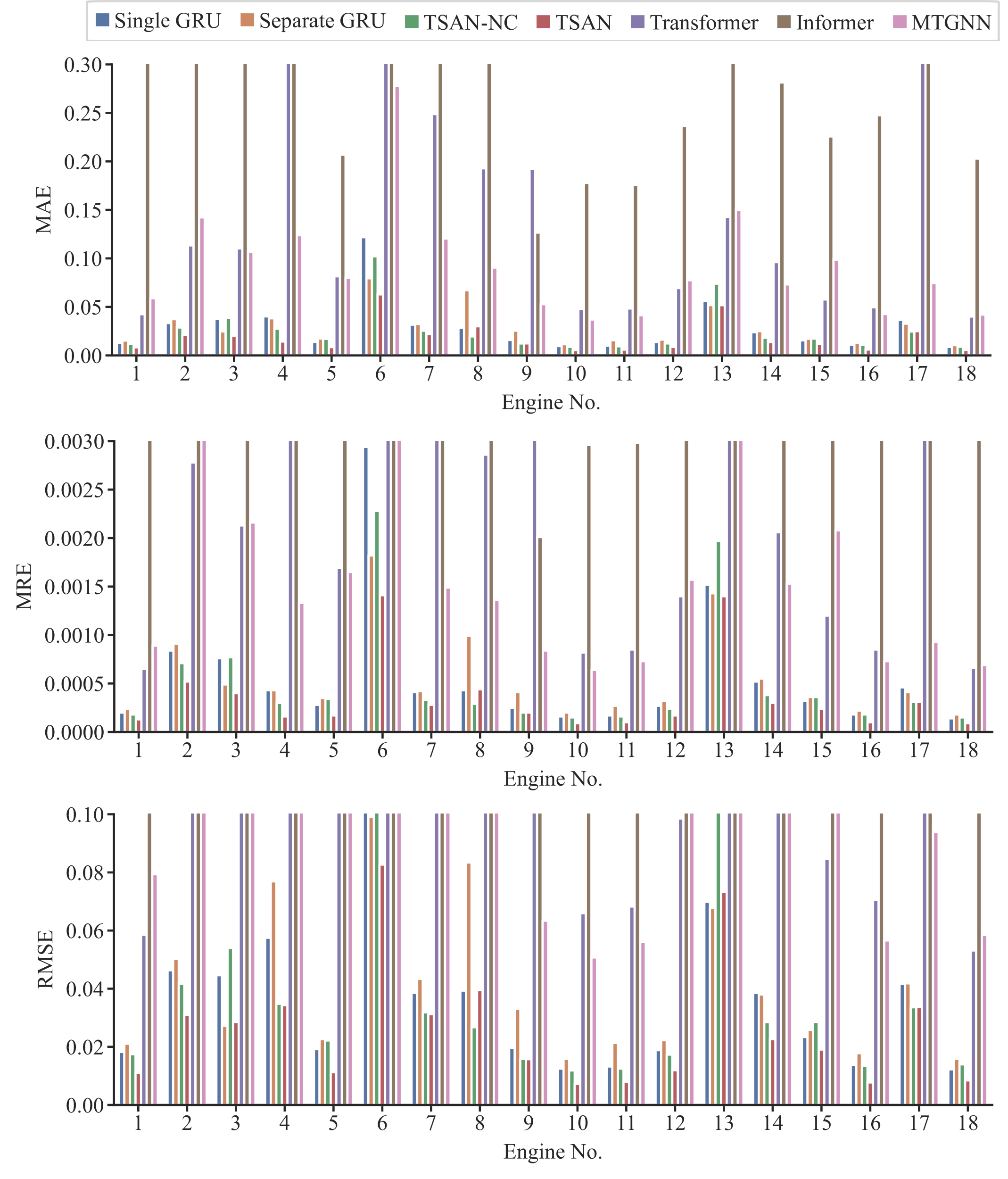
Fig. 9: TSAN achieves the best overall error profile across engines and metrics among seven compared methods.
Figure gallery
A few representative visuals from the paper that show the grouped fine-tuning idea, transferable snippets, and benchmark results.
Trend-grouped fine-tuning
TSAN organizes transferable snippets into degradation-trend groups before selecting a specialized predictor.
Transferable snippets
Local trajectory similarity exists across engines and across life stages of the same engine, supporting cross-engine transfer.
Trend-group visualization
Distinct EGTM ranges correspond to interpretable early-, mid-, and late-life degradation stages.
Benchmark results
TSAN yields the strongest MAE, MRE, and RMSE performance among the evaluated methods.
Citation
If this work is useful, please cite the paper.
@article{wu2026tsan,
  title   = {Engine-specific degradation prediction of aviation engines via transferable snippet augmentation: A trend-grouped fine-tuning perspective},
  author  = {Wu, Haoze and Zhong, Shisheng and Zhao, Minghang and Zhang, Yongjian and Fu, Xuyun and Fu, Song},
  journal = {Advanced Engineering Informatics},
  volume  = {74},
  pages   = {104685},
  year    = {2026},
  doi     = {10.1016/j.aei.2026.104685},
  url     = {https://doi.org/10.1016/j.aei.2026.104685}
}
DOI
https://doi.org/10.1016/j.aei.2026.104685
Author share link
https://authors.elsevier.com/c/1mxnI5FA1kHGCw
Contact
- Shisheng Zhong: zhongss#hit.edu.cn
- Yongjian Zhang: zhangyj#hitwh.edu.cn